Duplicate Data Entry
Your team enters the same information in three different places. Every time. Errors multiply. Trust in the data erodes. Your best people spend hours on work that should not exist.
Before you buy another tool, hire another consultant, or launch another digital transformation project, you need to understand how your business actually operates. DPIO builds that clarity first.
Takes 10 minutes. No sales call required.
Every disconnected system, manual workaround, and undocumented process is costing your business more than you realise. Not just in time. In revenue, customer experience, growth capacity, and the energy of your best people.
Your team enters the same information in three different places. Every time. Errors multiply. Trust in the data erodes. Your best people spend hours on work that should not exist.
Your business runs on a patchwork of spreadsheets that only one person understands. Version conflicts. Broken formulas. Reports that take half a day to compile and are out of date before they're read.
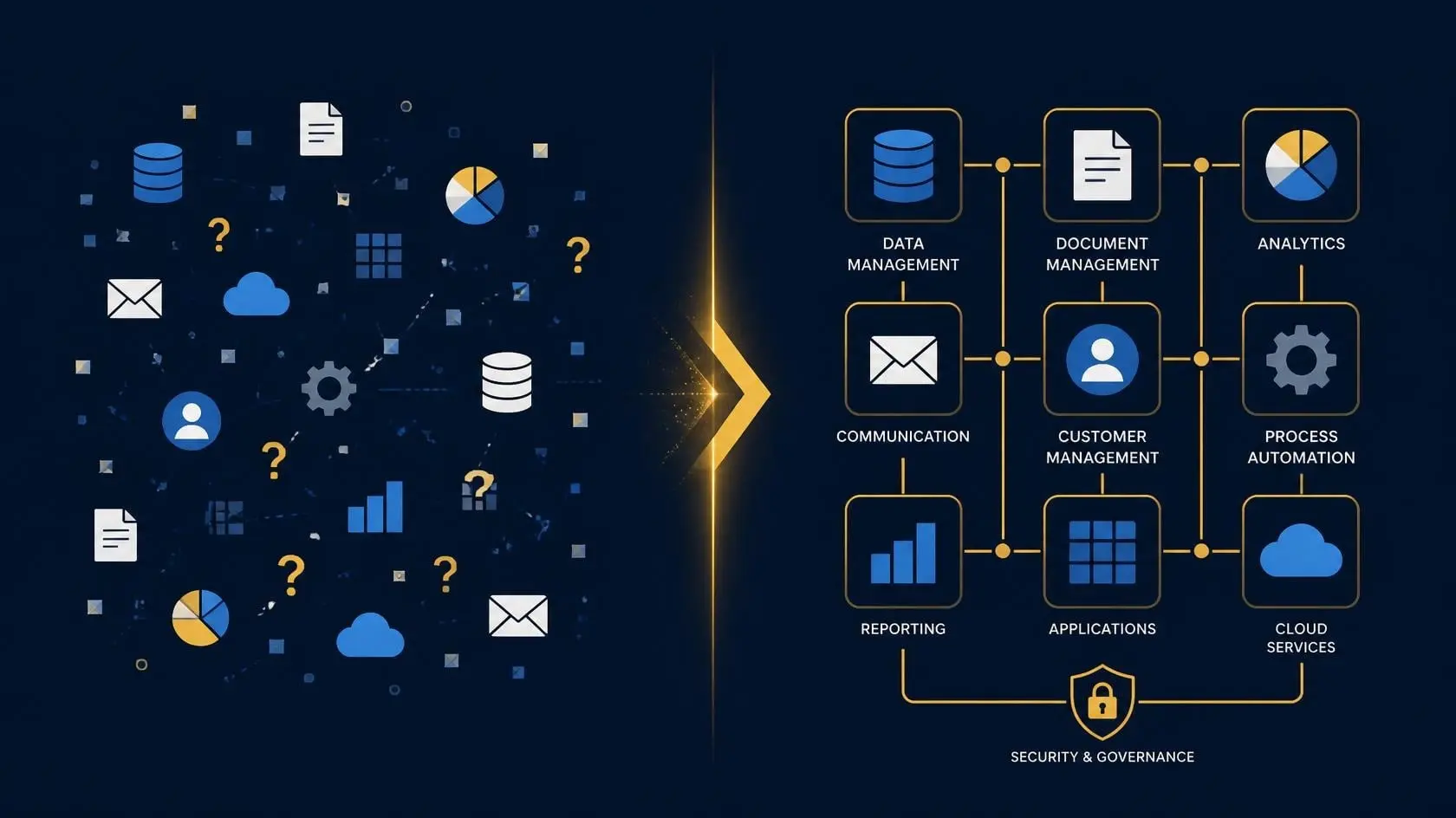
Your CRM does not talk to your accounting software. Your project tool does not connect to your quoting system. Each platform is an island. Data does not flow. Decisions are made on guesswork.
Getting a clear view of your business performance takes hours of manual work. By the time a report is ready, the situation has changed. Decisions are reactive because information is always late.
Reminders sent by hand. Follow-ups typed individually. Invoices created one by one. Your team is performing work that a properly designed system would handle automatically, invisibly, and without error.
You cannot see your pipeline, your cash position, your operational load, or your team performance in one place. Running your business feels like flying without instruments. Growth feels risky because you cannot measure it.
Every new client or project adds more administrative weight. Your systems were designed for the business you had, not the one you are building. Scaling feels hard because the architecture is not designed to scale.
Certain tasks, approvals, or handoffs consistently slow everything down. The same problems recur every week. The root cause has never been identified because no one has mapped the process end to end.
You sense inefficiency everywhere. Costs feel higher than they should be. Clients occasionally slip through. Delays happen more than they should. But the root cause stays frustratingly unclear.
DPIO is not an acronym for a software product. It is a structured, four-pillar systems architecture methodology built to diagnose, design, and transform how businesses operate. Every engagement follows this framework.
Before you can run a business on data, you need to understand where your data lives, how it flows, where it gets lost, and why you cannot trust it. DPIO maps your data landscape and designs a foundation where information is accurate, accessible, and actionable.
Every business is a collection of processes. Most of those processes were never designed, they evolved. DPIO maps your current workflows, identifies every bottleneck and redundancy, redesigns your processes for efficiency, and creates the documented foundation your team can follow consistently.
Disconnected tools create disconnected businesses. DPIO identifies where your systems should connect, designs the integrations that eliminate manual handoffs, and ensures your technology stack works as a unified platform rather than a collection of isolated tools.
Systems architecture is not a one-time event. DPIO builds the dashboards, KPIs, and feedback loops that allow your business to measure, learn, and improve continuously. The Optimise pillar turns your operation into a machine that gets better over time.
A structured four-step engagement model that moves from clarity to transformation. Every step is designed to deliver value before the next begins.
A structured assessment of your current operational state. Maps your software stack, identifies key process pain points, data flow gaps, and reporting challenges. The starting point for every DPIO engagement.
A 90-minute deep-dive with a DPIO systems architect. Covers current state assessment, process bottleneck analysis, software stack review, data flow assessment, automation opportunities, and integration recommendations. Includes 10 written deliverables.
A detailed architectural design of how your business should operate. Process maps, integration specifications, technology recommendations, data architecture, and a fully sequenced implementation roadmap. Your blueprint for the operating system your business needs.
With the blueprint in place, DPIO can support or lead implementation: system configuration, workflow automation, integration build, team training, and dashboard setup. Then the Optimise pillar takes over, measuring and improving continuously.
A cleaning company in Edmonton, Alberta. Manual operations, disconnected software, no reporting, and a revenue ceiling that would not budge. DPIO applied the full framework.
Every service is designed to deliver independent value. You do not need to commit to a full engagement to get clarity. Start wherever makes sense for your business right now.
DPIO works with any business that operates with people, software, and processes. These are the sectors where operational architecture challenges are most common and where the DPIO Framework delivers the most measurable impact.
Most technology projects fail not because of bad software, but because the business was not architecturally ready for it. DPIO builds that readiness first.
Every software implementation that fails does so because the processes were broken before the technology arrived. DPIO designs your architecture first, so any technology you adopt fits your business instead of fighting it.
Automating a broken process makes it break faster. DPIO maps, analyses, and redesigns your processes before any automation is considered. The result is automation that actually works because it is built on a sound foundation.
A dashboard built on unreliable, fragmented data is worse than no dashboard at all. DPIO establishes data architecture, cleans data flows, and builds reporting infrastructure that you can actually trust and act on.
Technology is a tool, not a strategy. DPIO starts with your business objectives and works backward to the systems that support them. Every recommendation is driven by business outcomes, not product capabilities.
DPIO does not sell software and does not earn commissions from any technology vendor. Every recommendation is driven entirely by what is right for your business. Independence is the foundation of trust.
Every DPIO engagement produces written, documented deliverables that become permanent assets for your business. Process maps, architecture diagrams, roadmaps, and recommendations you can share, implement, and build on.
The DPIO Framework (Data, Process, Integrate, Optimise) is a proven, structured methodology applied consistently across every engagement. Not ad hoc consulting. A repeatable system that delivers reliable outcomes.
KL Cleaning & Home Services grew from $7,000 in annual revenue (2021) to $64,500 (2025) and is on pace to exceed that in 2026. Real business. Real data. Tracked in live systems. Read the case study.
Straight answers to the questions business owners ask most often before engaging with DPIO.
Most technology investments fail because the architecture was wrong before the software arrived. DPIO builds the clarity, the design, and the roadmap that makes every technology decision better.
Vendor-neutral. No software sales. No ongoing obligation. Serving Canadian businesses.
Before you buy another tool, hire another consultant, or launch another digital transformation project, you need to understand how your business actually operates. DPIO builds that clarity first.
Takes 10 minutes. No sales call required.
Every disconnected system, manual workaround, and undocumented process is costing your business more than you realise. Not just in time. In revenue, customer experience, growth capacity, and the energy of your best people.
Your team enters the same information in three different places. Every time. Errors multiply. Trust in the data erodes. Your best people spend hours on work that should not exist.
Your business runs on a patchwork of spreadsheets that only one person understands. Version conflicts. Broken formulas. Reports that take half a day to compile and are out of date before they're read.
Your CRM does not talk to your accounting software. Your project tool does not connect to your quoting system. Each platform is an island. Data does not flow. Decisions are made on guesswork.
Getting a clear view of your business performance takes hours of manual work. By the time a report is ready, the situation has changed. Decisions are reactive because information is always late.
Reminders sent by hand. Follow-ups typed individually. Invoices created one by one. Your team is performing work that a properly designed system would handle automatically, invisibly, and without error.
You cannot see your pipeline, your cash position, your operational load, or your team performance in one place. Running your business feels like flying without instruments. Growth feels risky because you cannot measure it.
Every new client or project adds more administrative weight. Your systems were designed for the business you had, not the one you are building. Scaling feels hard because the architecture is not designed to scale.
Certain tasks, approvals, or handoffs consistently slow everything down. The same problems recur every week. The root cause has never been identified because no one has mapped the process end to end.
You sense inefficiency everywhere. Costs feel higher than they should be. Clients occasionally slip through. Delays happen more than they should. But the root cause stays frustratingly unclear.
DPIO is not an acronym for a software product. It is a structured, four-pillar systems architecture methodology built to diagnose, design, and transform how businesses operate. Every engagement follows this framework.
Before you can run a business on data, you need to understand where your data lives, how it flows, where it gets lost, and why you cannot trust it. DPIO maps your data landscape and designs a foundation where information is accurate, accessible, and actionable.
Every business is a collection of processes. Most of those processes were never designed, they evolved. DPIO maps your current workflows, identifies every bottleneck and redundancy, redesigns your processes for efficiency, and creates the documented foundation your team can follow consistently.
Disconnected tools create disconnected businesses. DPIO identifies where your systems should connect, designs the integrations that eliminate manual handoffs, and ensures your technology stack works as a unified platform rather than a collection of isolated tools.
Systems architecture is not a one-time event. DPIO builds the dashboards, KPIs, and feedback loops that allow your business to measure, learn, and improve continuously. The Optimise pillar turns your operation into a machine that gets better over time.
A structured four-step engagement model that moves from clarity to transformation. Every step is designed to deliver value before the next begins.
A structured assessment of your current operational state. Maps your software stack, identifies key process pain points, data flow gaps, and reporting challenges. The starting point for every DPIO engagement.
A 90-minute deep-dive with a DPIO systems architect. Covers current state assessment, process bottleneck analysis, software stack review, data flow assessment, automation opportunities, and integration recommendations. Includes 10 written deliverables.
A detailed architectural design of how your business should operate. Process maps, integration specifications, technology recommendations, data architecture, and a fully sequenced implementation roadmap. Your blueprint for the operating system your business needs.
With the blueprint in place, DPIO can support or lead implementation: system configuration, workflow automation, integration build, team training, and dashboard setup. Then the Optimise pillar takes over, measuring and improving continuously.
A cleaning company in Edmonton, Alberta. Manual operations, disconnected software, no reporting, and a revenue ceiling that would not budge. DPIO applied the full framework.
Every service is designed to deliver independent value. You do not need to commit to a full engagement to get clarity. Start wherever makes sense for your business right now.
DPIO works with any business that operates with people, software, and processes. These are the sectors where operational architecture challenges are most common and where the DPIO Framework delivers the most measurable impact.
Most technology projects fail not because of bad software, but because the business was not architecturally ready for it. DPIO builds that readiness first.
Every software implementation that fails does so because the processes were broken before the technology arrived. DPIO designs your architecture first, so any technology you adopt fits your business instead of fighting it.
Automating a broken process makes it break faster. DPIO maps, analyses, and redesigns your processes before any automation is considered. The result is automation that actually works because it is built on a sound foundation.
A dashboard built on unreliable, fragmented data is worse than no dashboard at all. DPIO establishes data architecture, cleans data flows, and builds reporting infrastructure that you can actually trust and act on.
Technology is a tool, not a strategy. DPIO starts with your business objectives and works backward to the systems that support them. Every recommendation is driven by business outcomes, not product capabilities.
DPIO does not sell software and does not earn commissions from any technology vendor. Every recommendation is driven entirely by what is right for your business. Independence is the foundation of trust.
Every DPIO engagement produces written, documented deliverables that become permanent assets for your business. Process maps, architecture diagrams, roadmaps, and recommendations you can share, implement, and build on.
The DPIO Framework (Data, Process, Integrate, Optimise) is a proven, structured methodology applied consistently across every engagement. Not ad hoc consulting. A repeatable system that delivers reliable outcomes.
KL Cleaning & Home Services grew from $7,000 in annual revenue (2021) to $64,500 (2025) and is on pace to exceed that in 2026. Real business. Real data. Tracked in live systems. Read the case study.
Straight answers to the questions business owners ask most often before engaging with DPIO.
Most technology investments fail because the architecture was wrong before the software arrived. DPIO builds the clarity, the design, and the roadmap that makes every technology decision better.
Vendor-neutral. No software sales. No ongoing obligation. Serving Canadian businesses.
From system optimization to cloud integration and data security, our key milestones reflect our commitment to creating a technologically advanced future for all.
Reduction in system downtime
Systems Designed
System efficiency rate
Projects successfully completed
Cloud-based solutions
Thousands of systems optimized
Systems architecture is the practice of designing and organizing complex systems to ensure efficiency and scalability. It involves efforts to enhance performance, integrate technologies, and manage resources effectively.
Together, we partner with leading organizations dedicated to advancing technology and building a smarter future.







Join us in our mission to revolutionize technology and enhance system efficiency. We focus on delivering cutting-edge solutions for a smarter tomorrow.